What are abrasive removal brush segments?
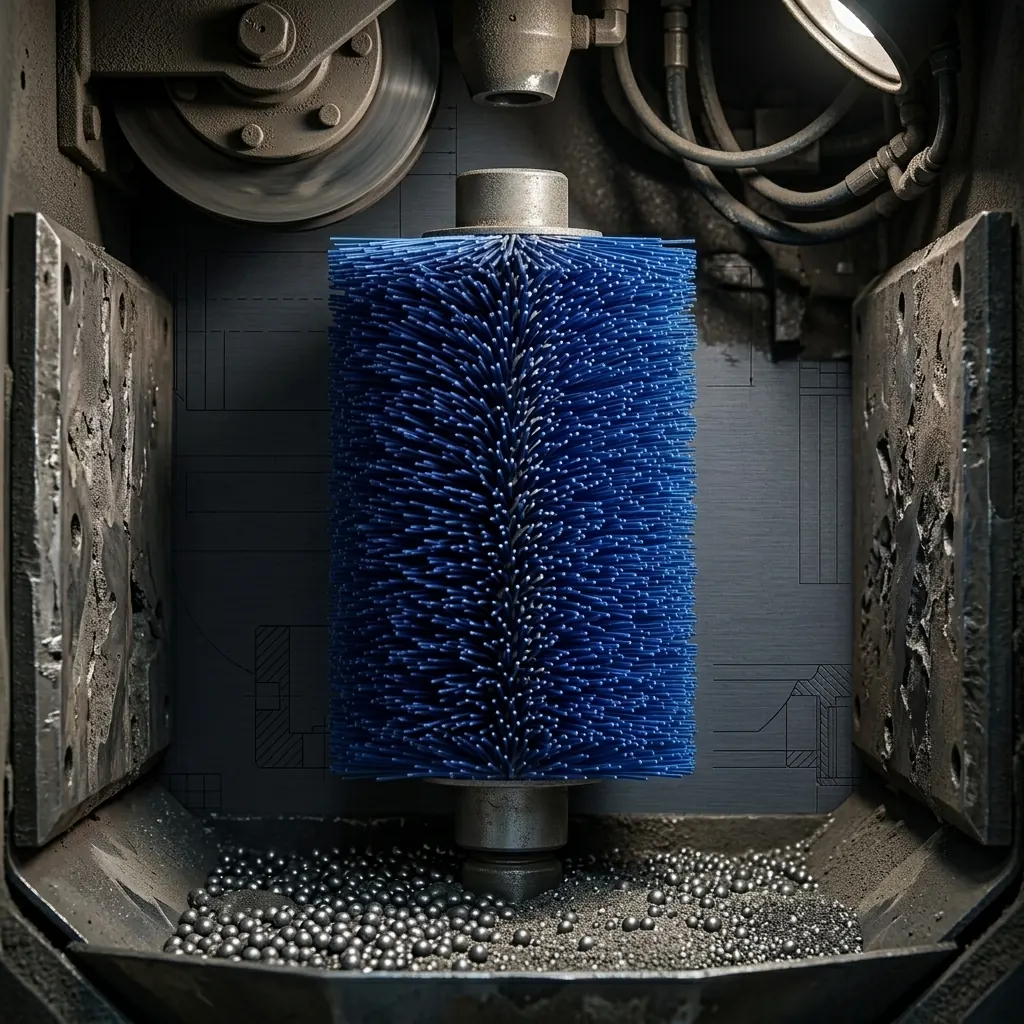
Abrasive removal brush segments are modular surface-finishing tools built from polymer or steel filaments infused with industrial abrasive grit. They are designed to remove burrs, edge fractures and thermal oxides from machined parts without the dimensional risk that comes with rigid grinding media.
The word segment matters. Rather than replacing an entire brush head when the filaments wear, individual blocks are unclipped and swapped. On a production line running two shifts, that difference alone typically halves consumable spend over a year.
Why brush finishing beats rigid abrasives for deburring
In high-production machine shops across Dubai and Abu Dhabi, post-machining edge finishing can absorb up to a quarter of total component processing time. Three approaches compete for that work, and they are not equivalent.
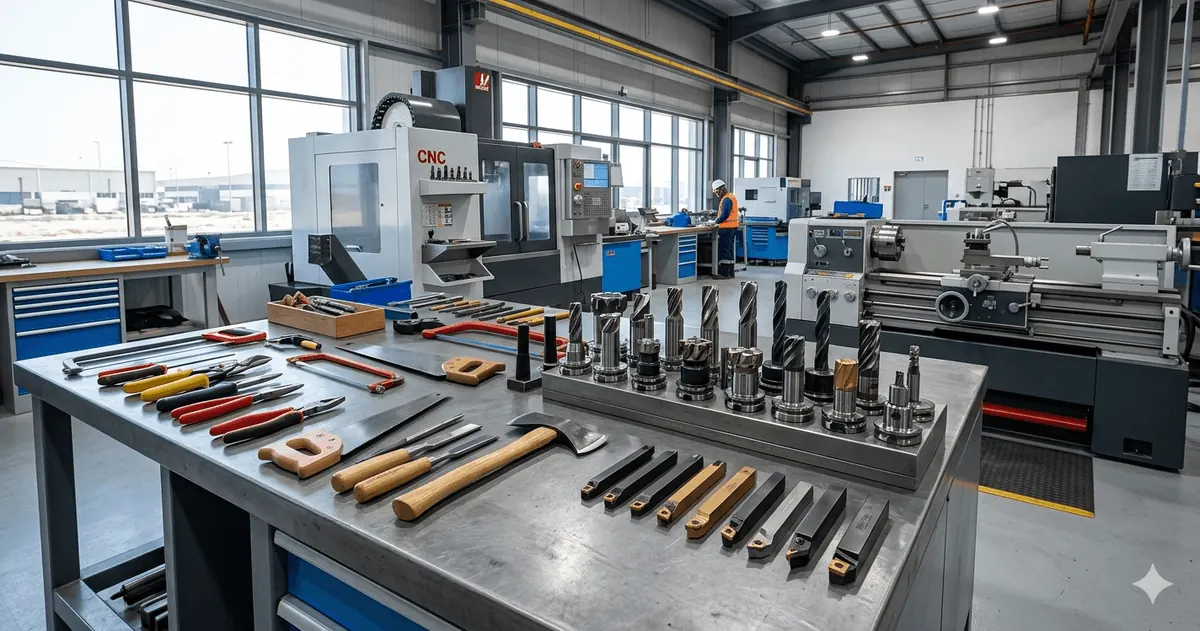
Rigid grinding wheels cut fast but do not conform. On a component with tight-tolerance features, a wheel will gouge an edge before the operator sees it happening. Manual deburring with hand files conforms perfectly but introduces operator-to-operator inconsistency that shows up in inspection.
Abrasive brush segments sit between the two. The filaments flex around complex geometry while the embedded grit does the cutting, which produces a repeatable micro-radius rather than a variable chamfer. For any part where the edge condition is specified on the drawing, that repeatability is the whole argument.
Filament material: silicon carbide, ceramic or steel
Fill choice is driven by the workpiece material and the finish you need, not by the machine. These are the three we supply most.
| Fill type | Best suited to | Typical grit range | Watch out for |
|---|---|---|---|
| Silicon carbide nylon | Aluminium, brass, copper, plastics | 120 – 500 | Loads and smears if run too slow or too hard |
| Ceramic nylon | Hardened steel, stainless, cast iron | 80 – 320 | More aggressive — verify edge tolerance first |
| Crimped steel wire | Heavy scale, weld spatter, structural steel | n/a (mechanical) | Will mark soft substrate; not for finishing passes |
A practical rule: if the part is non-ferrous or pre-coated, start with silicon carbide. If it is hardened steel or stainless and the brush seems to be polishing rather than cutting, move to ceramic.
Getting the cutting parameters right
More brush failures come from wrong parameters than from wrong product. Four numbers matter.
- Surface speed. Abrasive nylon works between roughly 8 and 20 m/s. Below that the filament flexes instead of cutting; above it the nylon softens and glazes.
- Interference (depth of engagement). Typically 2 – 5 mm of filament compression. More pressure does not cut faster — it bends the filament so the grit stops presenting to the work.
- Direction. Reversing rotation periodically evens out the wear taper and can extend usable life by 20 – 30 percent.
- Coolant. Wet running on aluminium prevents the smearing that otherwise welds swarf into the filament tips.
Brush segments on blast machines
A distinct application worth separating out: shot blast and wheel blast machines use brush segments at the cabinet exit for blow-off, sweeping residual steel shot and grit off the workpiece before it leaves the machine.
These are almost never catalogue items, because every blast machine manufacturer uses its own backing profile and mounting centres. We cover the selection and replacement process in detail on our dedicated page for abrasive brushes for shot blast machines.
Estimating replacement intervals
Filament life depends on contact pressure, surface speed and workpiece material, so any number is indicative. As a planning figure, abrasive nylon segments in continuous deburring service run 80 – 200 operating hours before trim length falls below effective contact.
The practical method is to measure trim height at each shift change against the original dimension. Once you have two or three data points you have a wear rate, and replacement becomes a scheduled item rather than a line stoppage.
Common questions
What grit should I use for deburring aluminium?
Silicon carbide abrasive nylon in the 120 – 320 grit range. Coarser grit loads and smears on soft non-ferrous metal. Keep surface speed below roughly 12 m/s and run wet where the machine allows.
Can abrasive brush segments be customised for a specific spindle mount?
Yes. Provide the arbor diameter, backing profile and mounting centres — or send a sample of the worn segment — and we build to that drawing. Custom mounts are routine rather than exceptional in this product group.
How do I prevent filament smearing on aluminium parts?
Smearing means the nylon is softening before the grit cuts. Reduce interference to 2 – 3 mm, raise surface speed into the 12 – 18 m/s band, and introduce coolant. If it persists, the grit is too fine for the stock removal you are asking for.
Do brush segments alter part dimensions?
Correctly specified, no. The filaments conform and produce a controlled micro-radius on the edge rather than removing material from the face. This is precisely why brush finishing is preferred over rigid abrasives on tight-tolerance components.
Need help selecting the right specification?
Send the application, the part you use today or a photo. We’ll recommend the right grade and quote it line by line.