If you run a shot blast machine, the brush is the part nobody specifies until it fails. It is rarely a catalogue item, the original supplier may no longer stock it, and when it wears out the machine keeps running while abrasive media walks out of the cabinet on every part you process.
Why blast machine brushes are almost always custom
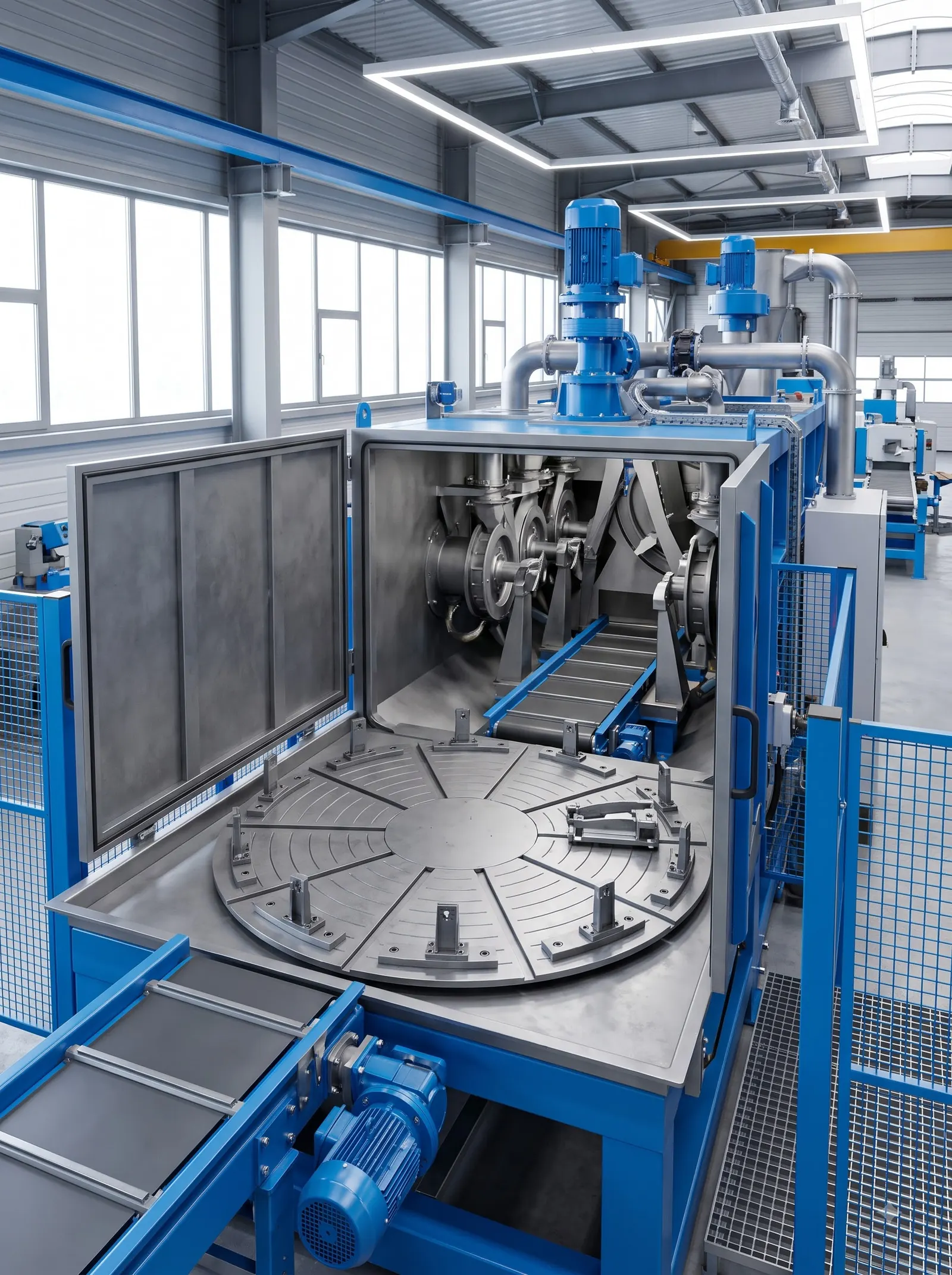
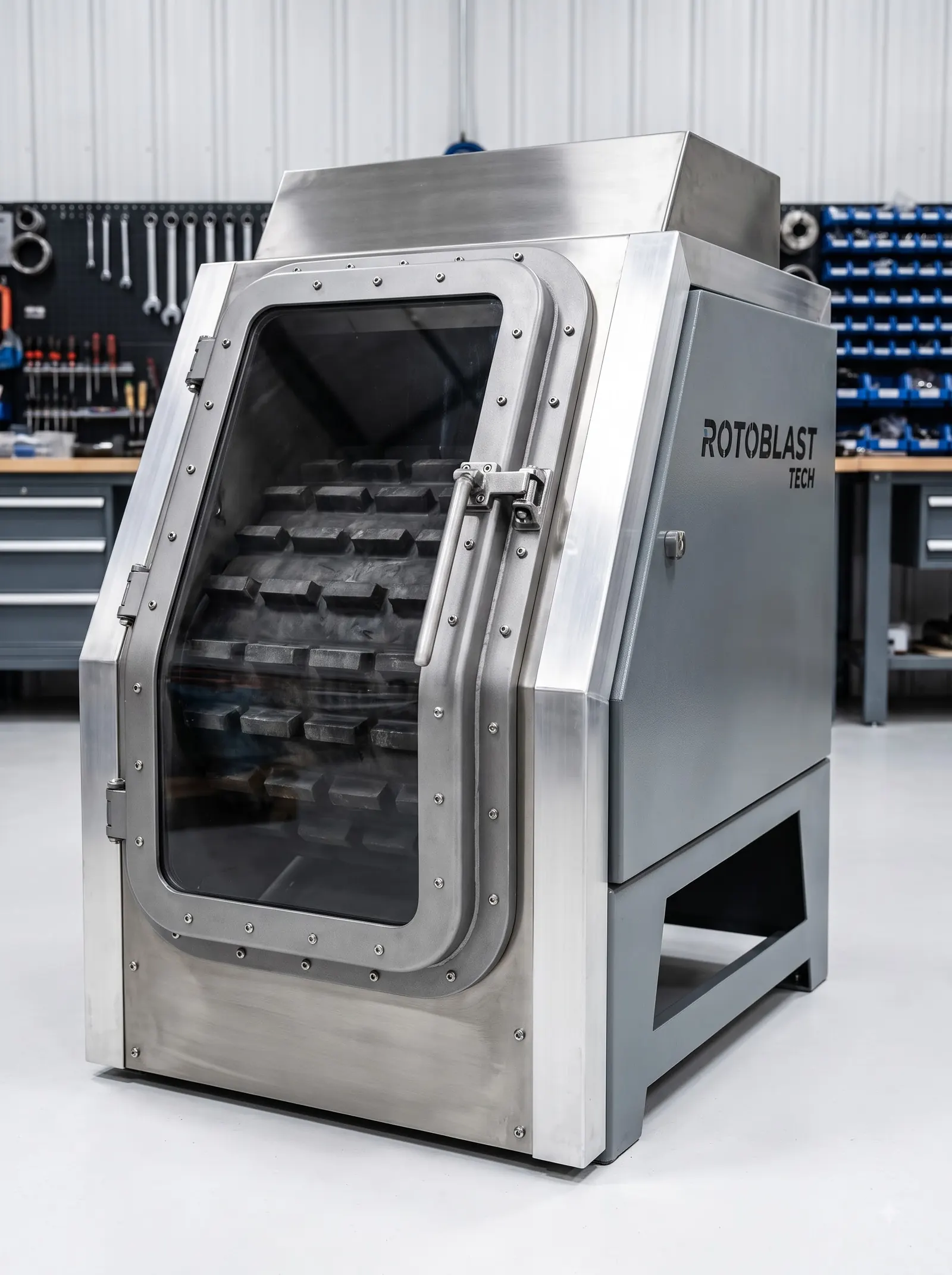
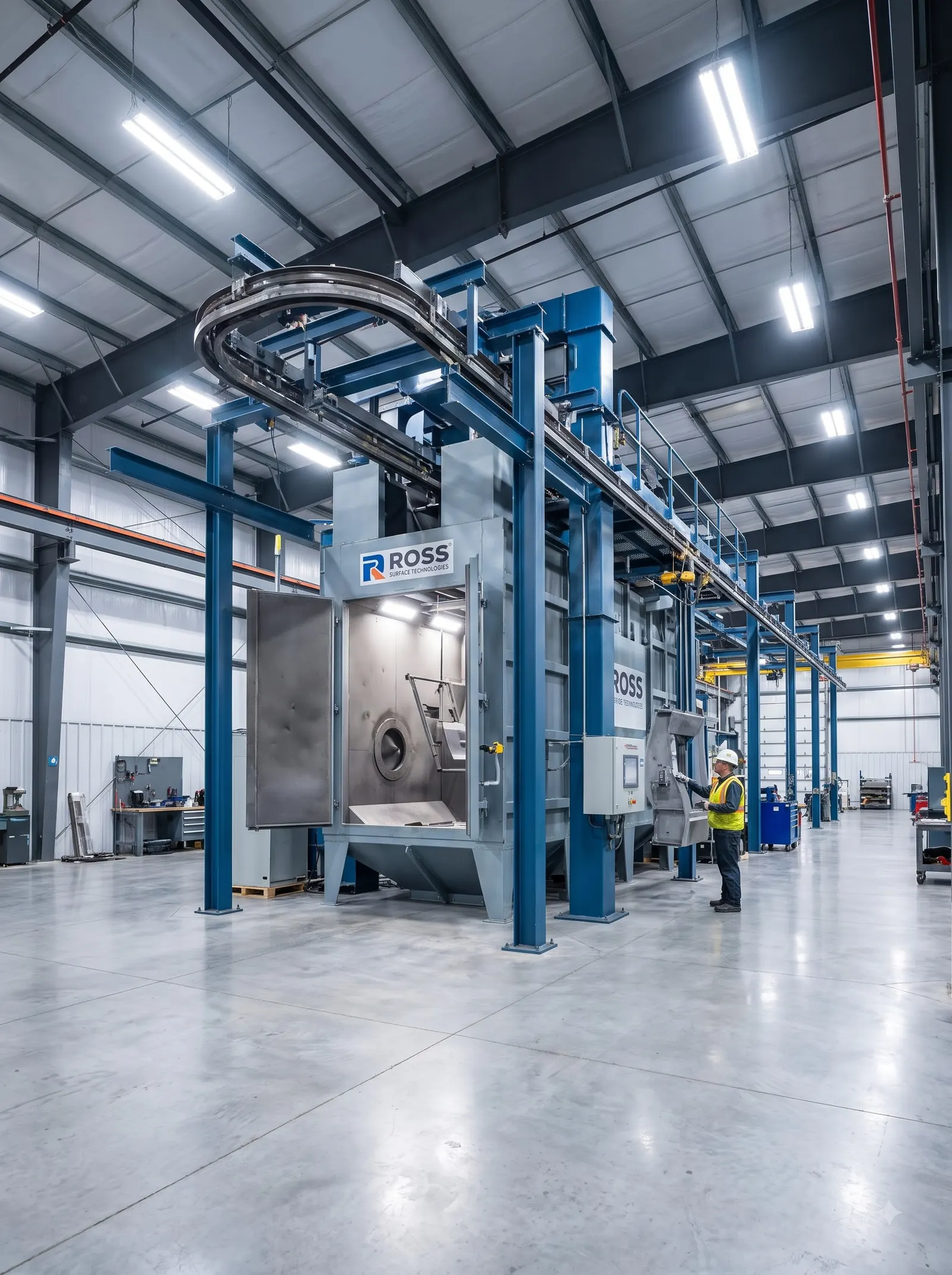
Shot blasting equipment is not standardised. Wheel blast, plate blast and tumble blast machines are built by dozens of manufacturers, and each uses its own segment length, backing channel profile and mounting centres. There is no industry standard. That is why searching for a part number rarely works, and why the practical route is to build from the worn segment or a dimensioned drawing.
We manufacture brush segments to that drawing: you specify — or we measure — the backing width, overall length, trim height, mounting hole centres and fill material, and the replacement drops straight into the existing frame.
What the brush is doing in the machine
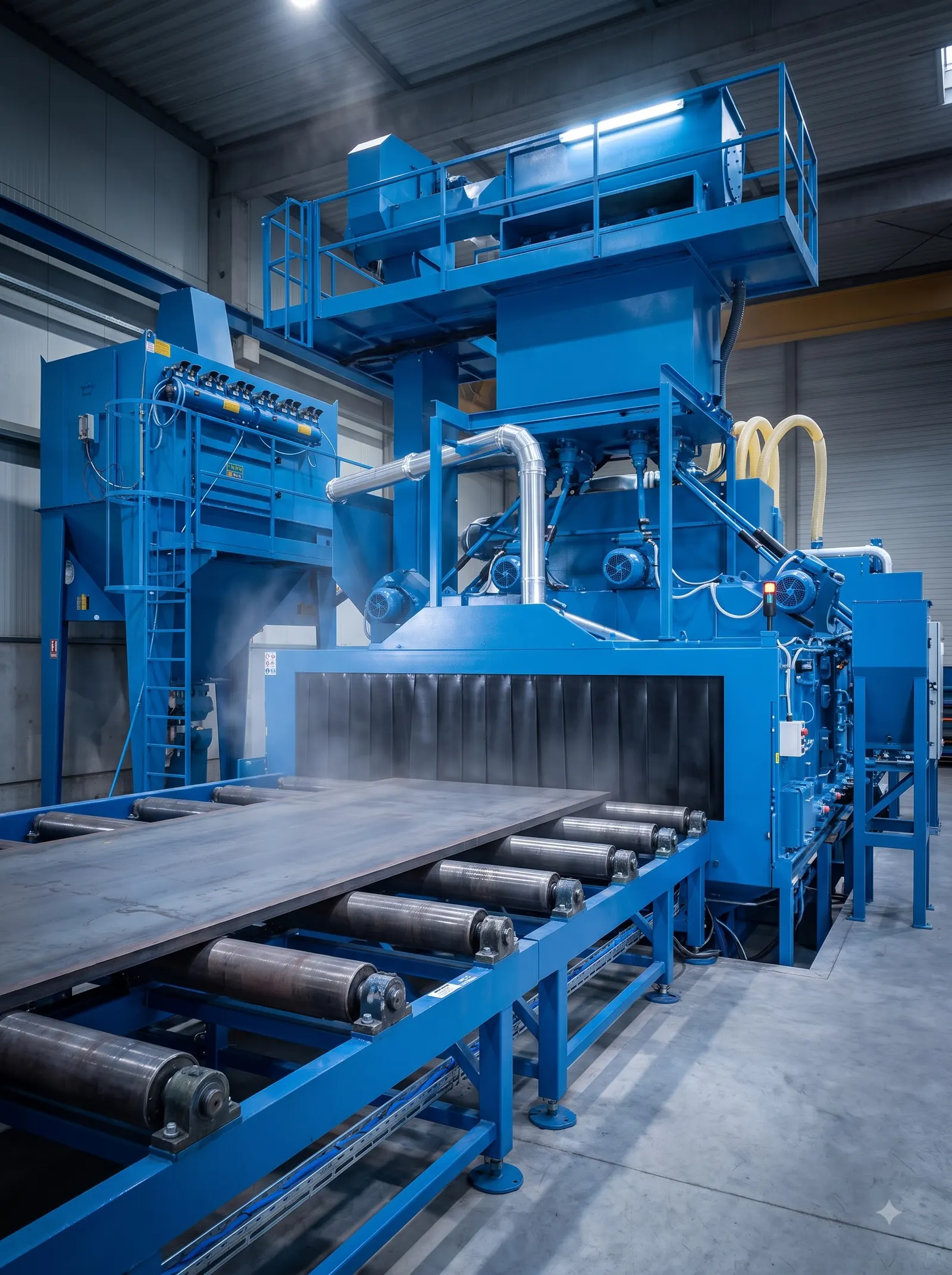
On most plate and section blast lines the brush performs blow-off: it sits at the cabinet exit and sweeps residual steel shot, grit and dust from the workpiece before it reaches the conveyor. In continuous shot blasting lines this is the difference between a clean part and one that carries abrasive into the paint shop. On some designs a second brush handles the underside, and on tumble machines rotary brushes clear media from complex geometry as the load discharges.
Three things go wrong when the brush is worn or wrongly specified:
- Media loss. Steel shot carried out of the cabinet is expensive, and it does not come back.
- Coating defects. Residual grit under paint or galvanising causes inclusions and adhesion failure.
- Housekeeping and safety. Loose shot on a shop floor is a slip hazard and it migrates into bearings and drives.
Choosing the fill material
Fill choice is driven by the substrate, not by the machine. The table below covers the four we supply most often.
| Fill material | Best for | Advantage | Trade-off |
|---|---|---|---|
| Crimped steel wire | Steel plate, structural section, heavy scale | Aggressive sweep, dislodges trapped shot | Can mark soft or coated substrate |
| Abrasive nylon (SiC) | Mixed substrate, light descaling in the same pass | Cuts as it sweeps, non-sparking | Higher cost per segment |
| Plain nylon | Non-ferrous, pre-coated, thin gauge | No surface marking, quiet running | Less effective on heavy carry-over |
| Tampico / natural | Delicate finishes, wet applications | Very soft, absorbs fluid | Short life in abrasive service |
Specifying a replacement segment
To quote accurately we need five dimensions and one decision. The dimensions are backing width, backing length, trim height, mounting hole diameter and hole centres. The decision is fill material, using the table above. If you would rather not measure, send us the worn segment and we will take the dimensions from it.
Where a machine is already down, tell us at the point of enquiry. We will normally quote a short-run interim set to get you back into production alongside the full replacement order.
Related consumables we supply
Blast machine maintenance rarely stops at the brush. We also supply the surrounding wear and drive components — see industrial bearings for conveyor and wheel assemblies, industrial air filters for the dust collection plant, and abrasive removal brush segments for deburring and weld cleaning elsewhere in the workshop.
Frequently asked questions
What does the brush on a shot blast machine actually do?
On most wheel blast and plate blast machines the brush sits at the exit and performs blow-off: it sweeps residual steel shot, grit and dust off the workpiece before it leaves the cabinet. Without it, abrasive is carried out of the machine, which loses expensive media, contaminates downstream coating and creates a housekeeping hazard.
Can you supply brushes for any make of blast machine?
Yes. Blast machine brushes are almost never a catalogue item, because every manufacturer uses its own segment length, backing profile and mounting centres. Send the dimensions, a drawing, or simply the worn segment, and we build a replacement to match.
Which fill material is best for blast machine blow-off?
For general steel plate and section, crimped steel wire gives the aggressive sweep needed to dislodge trapped shot. Where the substrate must not be marked — non-ferrous, pre-coated or thin gauge material — use nylon or abrasive nylon instead, which clears media without scoring the surface.
How do I know when blast machine brushes need replacing?
The practical indicator is media carry-over: when you start finding shot on the conveyor beyond the cabinet or in the paint area, the trim has worn past its effective contact length. Measuring trim height against the original dimension at each shift change gives you a predictable replacement interval.
Do you supply the abrasive media as well as the brushes?
Our focus is the brush consumables and the surrounding wear parts — segments, backing channel, mounting hardware, bearings and drive components. We work alongside your existing media supplier rather than replacing them.
How quickly can replacement segments be supplied in the UAE?
Where the profile matches a standard backing we can often build within a few working days. Fully bespoke segments, or those needing a non-standard channel, typically run two to four weeks. If the machine is down, tell us — we will quote a short-run interim set alongside the full order.