Hydraulics
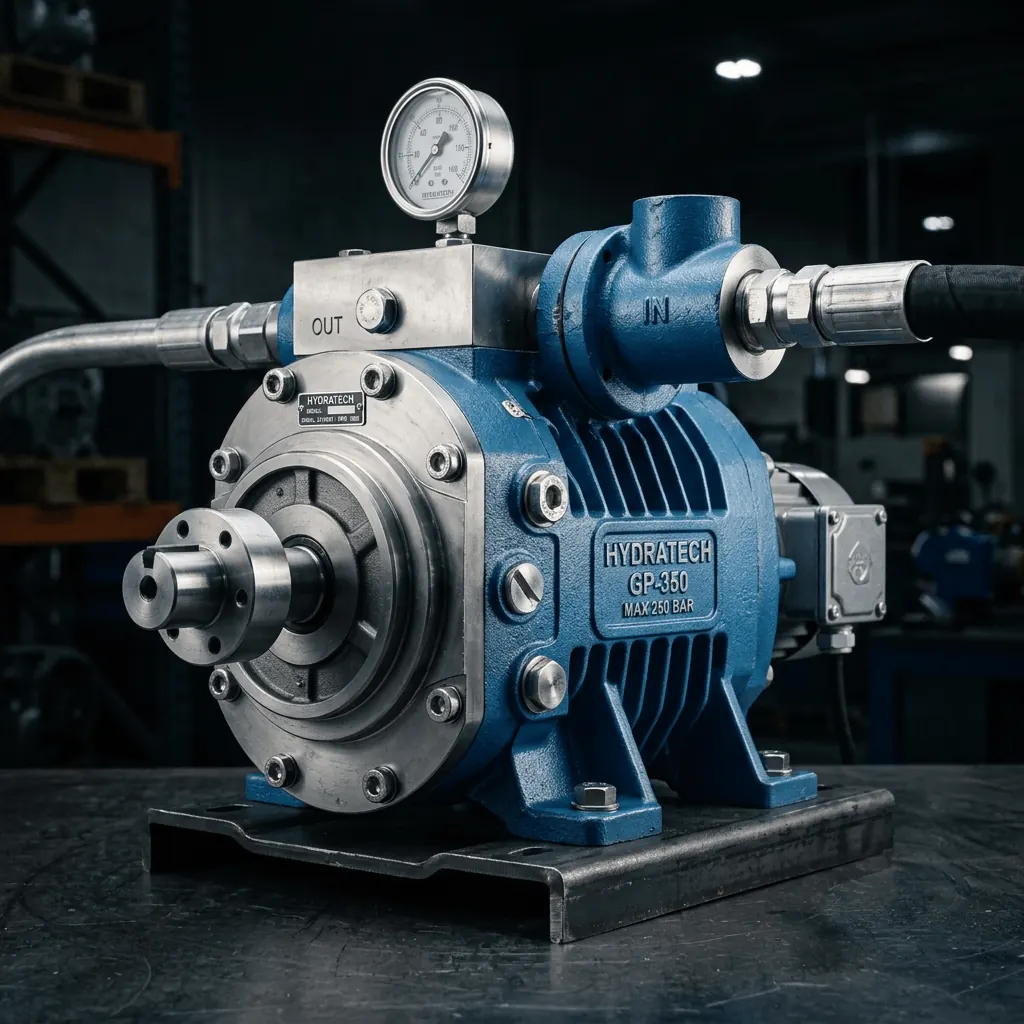
Industrial Hydraulic Pumps
- Pump types
- External gear, internal gear, vane, axial piston, radial piston
- Gear Pumps
- Vane Pumps
- Axial Piston Pumps
- Radial Piston Pumps
Industrial components & MRO supply · UAE & GCC
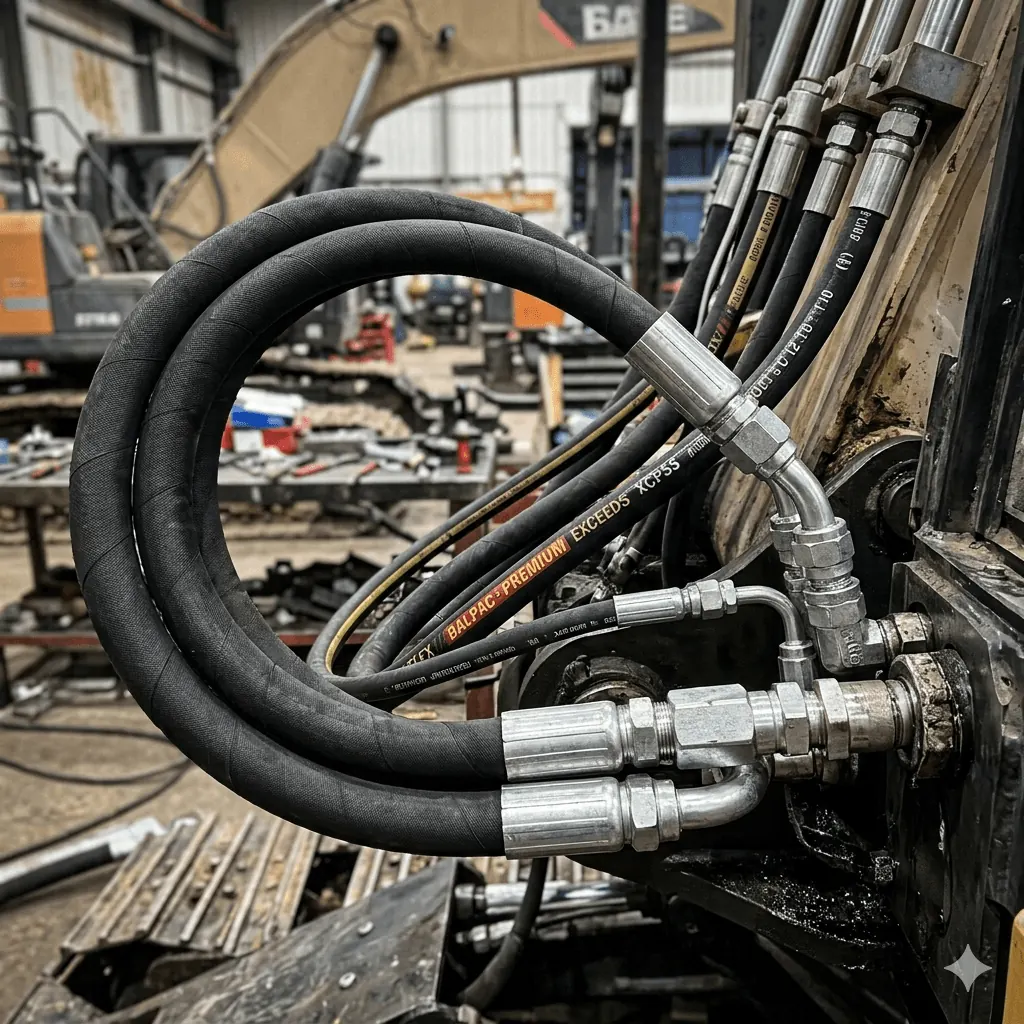 Product photograph · 1 / 5
Hydraulics · Fluid Conveyance
High-pressure hydraulic hoses engineered for durability and flexibility in extreme conditions — assembled, crimped and pressure-tested in house, with test certificates supplied on request.
Or call +971 56 620 2517 · Sun – Sat, 08:00 – 18:00 (GST)
A hydraulic hose is a flexible, reinforced conduit that carries pressurised fluid between components of a hydraulic system. Construction is layered: a synthetic rubber inner tube, one or more wire braid or spiral reinforcement layers that carry the pressure, and an abrasion-resistant outer cover.
| Specification | Details |
|---|---|
| Standards | EN 853 1SN / 2SN, EN 856 4SP / 4SH / R12 / R15, SAE 100R series |
| Working pressure | Up to 420 bar depending on construction and bore |
| Bore range | DN 5 – DN 51 (1/4" – 2") |
| Temperature range | −40 °C to +100 °C (+120 °C intermittent) |
| Reinforcement | Wire braid, spiral wound, textile braid, thermoplastic |
| Fittings | JIC, BSP, NPT, ORFS, DIN metric, SAE flange |
| Testing | Crimped and proof-tested in house; certificates on request |
| Lead time | Standard assemblies same day; specials 3 – 5 days |
Ranges shown are what we typically supply. The exact rating, size and standard for your item are stated on the quotation.
Have an OEM or competitor part number? Send it and we will quote the genuine item where available alongside any equivalent, with dimensions and ratings stated so the substitution can be checked.
Wire-braided hose (1SN/2SN) uses one or two crossed braid layers and suits steady pressure with moderate flexing. Spiral hose (4SP/4SH) uses four or six wound layers and handles higher pressure and heavy impulse cycling. Choose spiral where pressure surges or shock loads are frequent.
The dominant causes in the Gulf are thermal hardening of the inner tube from sustained high ambient temperature, bend radius below the manufacturer minimum, pressure surge spikes, and UV plus abrasive sand attack on the outer cover. Specifying a higher temperature rating and fitting sleeving on exposed runs addresses most of it.
Yes. Bring or send the failed assembly and we will match bore, length, fitting type and orientation, then crimp and pressure-test the replacement. Most standard assemblies are ready the same day.
Most manufacturers recommend replacement every five to seven years from the date of manufacture regardless of appearance, and immediately on any sign of cover cracking, wire exposure, blistering or weeping at the ferrule.
Often sourced together
Hydraulics
Filtration
Motion & Power Transmission
Send us the part number, specification, drawing or photo. Our team will help identify the right sourcing option.